

Your old car has been sitting in the garage for months. It needs constant repairs, its mileage is getting worse, and you barely use it anymore. Yet every time you think about getting rid of it, the same thought comes up:
“Where do I even start?”
The good news is that you no longer have to spend your day visiting multiple scrap dealers or figuring out how to transport an old, damaged vehicle yourself.
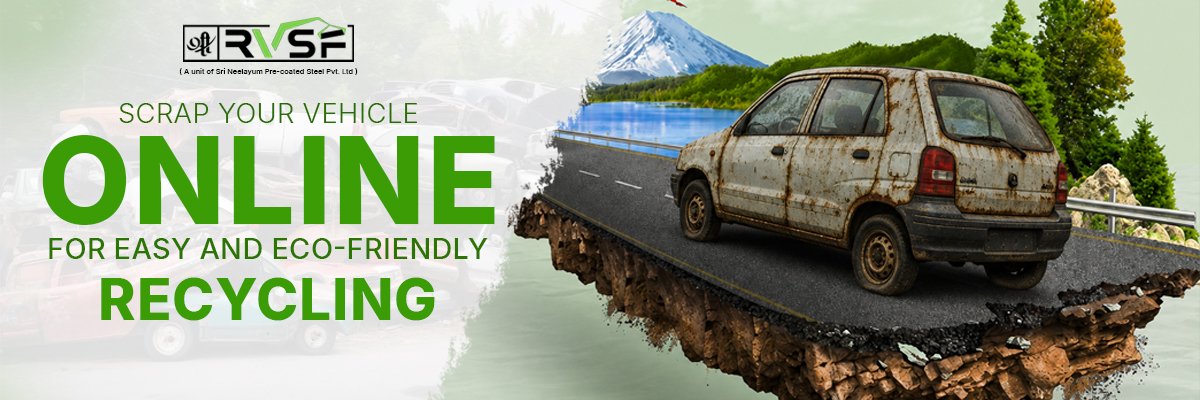
Today, vehicle owners can scrap their vehicle online by submitting basic details, documents and photographs to a registered vehicle scrapping facility and initiating the process from home.
But there is an important distinction.
Selling a vehicle online is not the same as responsibly recycling it online.
The digital step is only the beginning. The actual vehicle must still be processed through an authorised facility using the prescribed procedures for verification, depollution, dismantling, recycling and certification. India's Vehicle Scrapping Policy was specifically designed to formalise the previously fragmented scrapping ecosystem and encourage environmentally sound processing of end-of-life vehicles.
What Does “Scrap Your Vehicle Online” Actually Mean?
When people search for “sell scrap car online”, they are usually looking for three things:
A quick valuation.
Convenient pickup.
A hassle-free process.
An online vehicle-scrapping service brings these elements together.
Instead of physically visiting a facility first, you can generally begin by sharing details such as:
● Registration number
● Vehicle make and model
● Ownership information
● Vehicle condition
● Photographs
● Required identity and registration documents
For example, Sri RVSF's online request portal collects the vehicle category, brand, model and registration information, along with RC, identity, bank and vehicle photographs, before pickup details are scheduled.
This makes the first step considerably easier for vehicle owners in Patna and surrounding areas.
Why Are More Owners Looking to Scrap Their Vehicles Online?
Convenience is the obvious answer, but it is not the only one.
1. You Can Start From Home
An old car may not be roadworthy, insured for regular use, or practical to drive to different buyers for quotations.
An online request means you can begin the process without making repeated trips.
For owners of damaged, non-running or end-of-life vehicles, this can be particularly useful.
2. You Can Share Information Before Pickup
The initial vehicle details and photographs help the facility understand what vehicle is being offered and arrange the next steps.
This can make the process more organised than approaching multiple informal buyers one by one.
3. Pickup Can Simplify the Process
An RVSF may arrange vehicle pickup depending on its service area and the owner's location.
Sri RVSF, for instance, offers a pickup-based process through its online enquiry system and asks owners to provide their preferred pickup details.
4. The Process Can Continue Digitally
Documentation is one of the most important parts of responsible vehicle scrapping.
A formal facility can use digital systems to manage information and maintain a clearer record of the vehicle's journey.
Sri RVSF states that its paperwork is handled through an online system and that owners can track progress through the process.
What Happens After You Submit Your Vehicle Details?
This is where it becomes important to understand the difference between online booking and actual vehicle recycling.
Your vehicle does not get “scrapped on the internet.”
The online platform starts the process. The physical vehicle then enters the authorised facility's processing system.
The typical journey can look like this:
Submit → Evaluate → Verify → Pickup → Depollute → Dismantle → Recycle → Certify
Let's look at each stage.
Step 1: Submit Your Vehicle Details
You provide your registration details, ownership information, photographs and other required documents.
This gives the facility the information it needs to initiate the process.
Step 2: Vehicle Evaluation
The vehicle is assessed for its condition and recyclable value.
The final amount is not a government-fixed universal price. Vehicle value can vary depending on factors such as the vehicle's characteristics, weight, condition and the value of recoverable material.
Step 3: Documentation and Verification
The formal RVSF framework includes prescribed verification procedures and digital integration relating to vehicle scrapping.
Government rules provide RVSFs access to vehicle databases and require verification before vehicles enter the formal scrapping process.
Step 4: Pickup and Receipt
Once the process is initiated, the vehicle can be collected according to the facility's pickup arrangements.
At this point, using an authorised facility becomes important because you are not simply handing over ownership of an old car to an unknown buyer.
Step 5: Depollution
An end-of-life vehicle contains more than steel.
Fuel, oils, coolant, batteries, tyres and other materials require proper handling.
The 2025 End-of-Life Vehicle framework requires environmentally sound management, and the associated procedures cover treatment, depollution, dismantling, segregation, safe storage and recycling/refurbishment of recovered materials.
Step 6: Dismantling and Scrap Recycling
The vehicle is dismantled and its materials are separated.
Metals, plastics, tyres, batteries and other components can enter appropriate recovery, reuse, recycling or treatment channels.
This is where scrap recycling becomes more than simply “selling an old car.”
The goal is to recover useful resources while ensuring materials that cannot be reused or recycled are managed appropriately.
What About Industrial Scrap?
The same principle extends beyond individual vehicle owners.
India's recycling ecosystem also includes industrial scrap, including ferrous and non-ferrous materials generated through manufacturing, construction, engineering and other industrial activities.
Responsible scrap recycling helps recover materials that can be fed back into industrial supply chains instead of being wasted.
Sri RVSF also provides industrial scrap recycling services for ferrous and non-ferrous scrap, alongside its vehicle recycling operations.
For businesses, this opens a broader conversation around:
Waste reduction → Material recovery → Recycling → Resource efficiency
Is Online Vehicle Scrapping Safe?
The answer depends on who is actually handling the vehicle after the online enquiry.
An online form alone does not make a service authorised.
Before handing over your vehicle, verify that the facility is a registered RVSF.
That matters because the formal system exists specifically to bring vehicle scrapping into a regulated, documented and environmentally responsible framework. The government identifies formalisation of the informal sector, pollution reduction, road safety and resource recovery among the objectives of the Vehicle Scrapping Policy.
The difference is simple:
Online enquiry = convenience.
Authorised RVSF = formal processing.
You need both for a truly responsible online vehicle-scrapping journey.
Why This Matters for Vehicle Owners in Patna
For someone in Patna searching for “sell scrap car online”, the online route can make the process easier without compromising the importance of formal documentation.
Instead of:
Find buyer → negotiate → arrange transport → hand over car → worry about paperwork
the process can move towards:
Submit details → get evaluation → complete documentation → schedule pickup → receive certificates
Sri RVSF provides an online vehicle-scrapping request facility for owners to enter vehicle details, upload documents and photographs and submit pickup information.
That is particularly useful when the vehicle has been sitting unused for a long time or is no longer convenient to drive.
The Bottom Line
Your old car does not need to become a problem just because it has reached the end of its useful life.
Today, you can scrap your vehicle online and begin the process from the comfort of your home.
But remember: convenience should never replace responsibility.
Choose a registered facility.
Complete the documentation.
Let the vehicle be properly depolluted and dismantled.
Make sure recoverable materials enter the recycling chain.
And ensure the vehicle's journey is formally documented.
Your old car may be finished with the road.
It does not have to be finished with its value.
Ready to scrap your vehicle online?
Start your vehicle recycling request with Sri RVSF, Patna.
Sri RVSF — The Responsible Last Stop for Your Car.
Frequently Asked Questions
1. Can I scrap my vehicle online?
Yes. Online vehicle-scrapping services allow owners to begin the process by submitting vehicle details, documents and photographs. The physical vehicle must subsequently be collected and processed at the authorised facility. Sri RVSF provides an online request portal for this purpose.
2. Can I sell my scrap car online from Patna?
Yes, you can begin the process online by providing the required vehicle and ownership details. Pickup arrangements can then be made based on the facility's service area and process.
3. Does online scrapping mean my car is crushed immediately?
No. The online process is primarily used to initiate the vehicle-scrapping request, collect information and arrange the next steps. The physical vehicle still needs to go through verification, depollution, dismantling and recycling at the appropriate facility.
4. What documents are generally required?
Requirements can vary, but vehicle owners should expect to provide documents relating to vehicle registration and ownership, along with identity and other information required by the facility. Sri RVSF's online form currently asks for RC, Aadhaar, bank details and vehicle photographs.
5. How do I know whether an online scrapping service is genuine?
Check whether the physical facility is registered as an RVSF and verify its official details before handing over your vehicle. An online form alone does not prove that the service provider is authorised.
Note: Eligibility, documentation, valuation, pickup availability and applicable benefits can vary by vehicle and location. Always confirm current requirements with the registered facility before proceeding.