

A vehicle reaches the end of its useful life long before it stops looking like a car.
It may still sit in your driveway. It may still start occasionally. It may even have some resale value. But when maintenance becomes expensive, safety becomes a concern, fitness requirements become difficult to meet, or the vehicle simply stops making financial sense, owners eventually face a decision:
What is the right way to retire it?
For many years, vehicle disposal in India was largely informal. An old vehicle would often be sold to a local scrap dealer, dismantled and eventually reduced to metal. While this system handled a significant amount of material, it did not provide the same level of formal documentation, traceability and environmental controls expected from today's vehicle recycling ecosystem.
India's Vehicle Scrapping Policy was introduced to help create a formal system for phasing out unfit and polluting vehicles, improving road safety and encouraging environment-friendly recycling. Registered Vehicle Scrapping Facilities, or RVSFs, are at the centre of that formal ecosystem.
What Is a Vehicle Scrapping Facility?
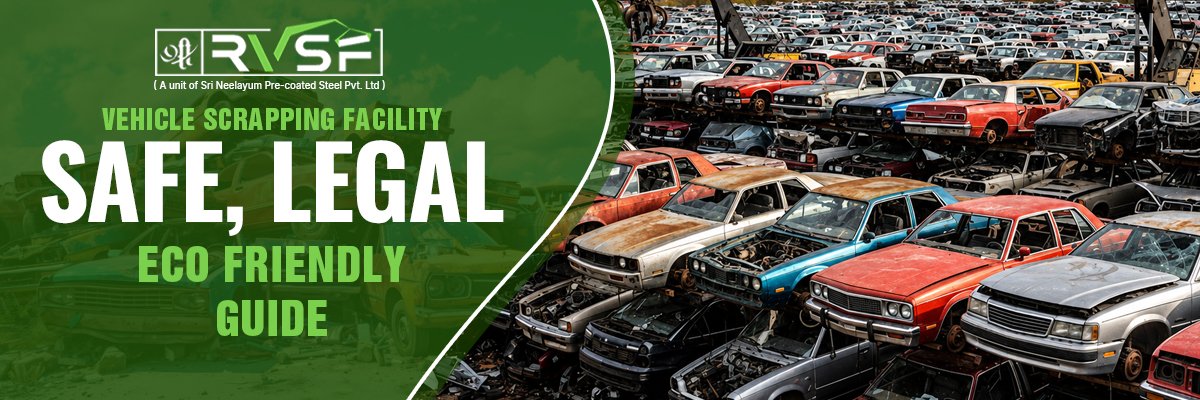
A vehicle scrapping facility is a specialised facility where end-of-life or unfit vehicles can be received and processed through prescribed procedures.
A Registered Vehicle Scrapping Facility (RVSF) is different from an ordinary scrap yard.
Under India's regulatory framework, RVSFs are registered and operate according to specified technical, procedural and documentation requirements. The formal system includes vehicle verification, access to relevant databases, issuance of scrapping certificates and prescribed handling of vehicles.
The idea is to transform vehicle disposal from:
“Sell the old car for metal.”
into:
“Formally retire the vehicle and recover its materials responsibly.”
What Makes a Registered Vehicle Scrapping Facility Different?
There are four major areas where an RVSF adds value.
1. Legal and Documentation Support
A vehicle does not stop being your legal responsibility simply because someone has taken it away.
That is why documentation matters.
Government rules define the Certificate of Deposit (CD) as the certificate issued by an RVSF acknowledging submission of the vehicle, while the Certificate of Vehicle Scrapping (CVS) recognises the final disposal of the vehicle. These certificates can be issued by RVSFs within the formal system.
This gives vehicle owners a formal documentation trail for the vehicle's final journey.
2. Vehicle Verification
The RVSF framework includes database and identity verification mechanisms before a vehicle is processed.
Government provisions give RVSFs access to VAHAN and allow verification against relevant police databases, including checks relating to stolen vehicles or vehicles involved in criminal activity.
That is one of the key reasons an RVSF should not be confused with an informal buyer.
3. Depollution and Safe Treatment
An end-of-life vehicle contains hazardous and potentially polluting materials.
The 2025 ELV framework defines environmentally sound management as handling and disposal in a way that protects human health and the environment from substances contained in an end-of-life vehicle.
The associated requirements cover depollution, collection of liquids and gases, handling of batteries and hazardous waste, dismantling, segregation, safe storage and recycling or refurbishment of materials.
This is an essential part of responsible vehicle recycling.
4. Material Recovery
A car that has reached the end of its road life is not necessarily the end of its material life.
Steel, aluminium, plastics, tyres, batteries and other components can be separated and sent towards appropriate recycling, recovery, reuse or treatment channels.
The result is a more circular approach:
Old vehicle → recovered materials → recycling → new products
That is why the modern vehicle-scrapping ecosystem is also part of India's larger circular-economy story.
Is Every Old Vehicle Automatically Scrapped?
This is one of the most misunderstood aspects of the subject.
The national Vehicle Scrapping Policy is focused on unfit and polluting vehicles, and the framework distinguishes between fitness-based scrapping and voluntary scrapping. The government's National Single Window System explains that the policy seeks to phase out unfit vehicles, including vehicles that fail prescribed fitness tests, while the wider ecosystem also accommodates voluntary scrapping.
So the question should not simply be:
“How old is my car?”
It should be:
“Is my vehicle still practical, fit and economical to keep—and what rules apply to it?”
Age can matter under particular state or vehicle-category rules, but it should not be treated as a universal statement that every vehicle crossing a certain age must automatically be scrapped.
What Happens Inside a Registered Scrapping Centre?
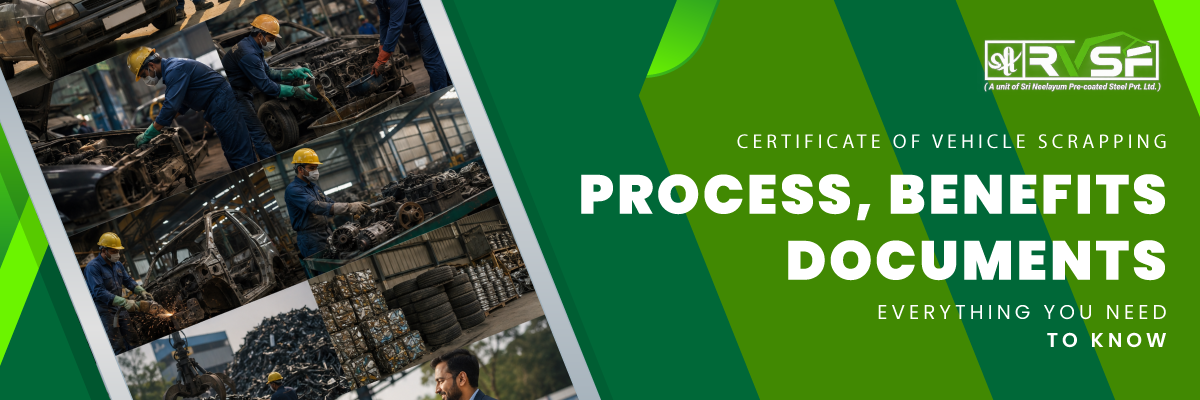
While the exact operational sequence can vary, an authorised vehicle scrapping facility generally handles several important stages.
Vehicle Reception
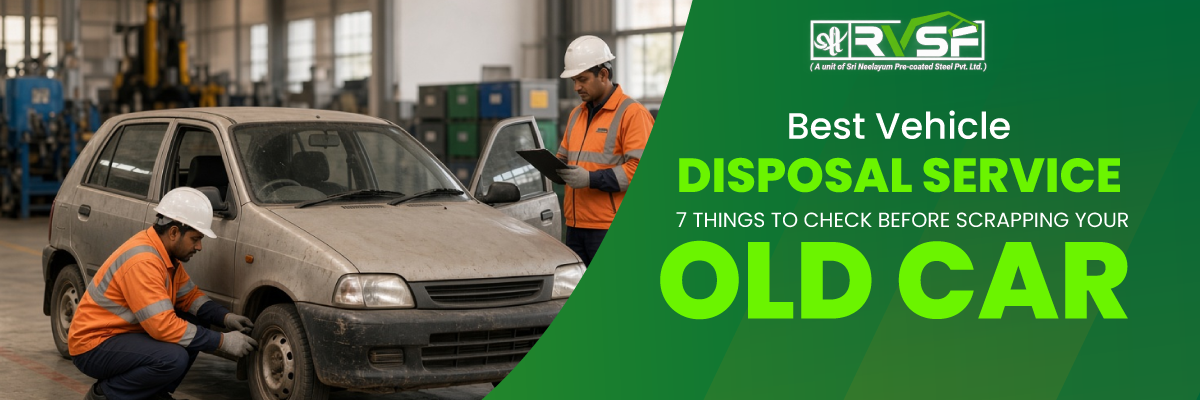
The vehicle is received and its details are documented.
Verification
Ownership, registration and other relevant information are verified through the prescribed system.
Depollution
Fluids, gases, batteries and hazardous components are removed and managed appropriately.
Dismantling
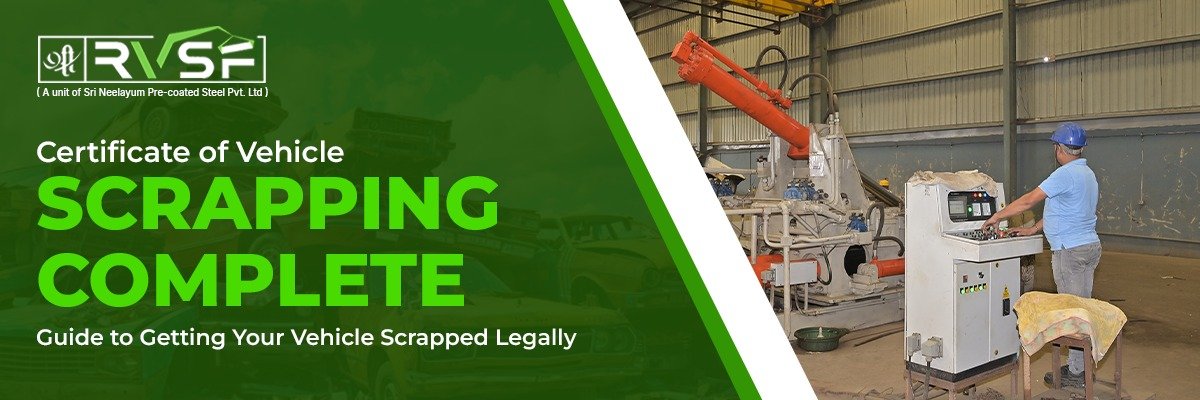
The vehicle is dismantled and its different material streams are separated.
Recycling and Recovery
Recoverable metals and materials are directed towards appropriate recycling or recovery channels.
Certification
The formal process produces the prescribed certificates, including the Certificate of Deposit and Certificate of Vehicle Scrapping as applicable.
What Is a Certificate of Vehicle Scrapping?
Simply put, the Certificate of Vehicle Scrapping documents the final disposal of the vehicle through the formal system.
This is different from merely receiving money from a scrap buyer.
A scrap buyer can pay you for a vehicle.
An RVSF provides a formal vehicle-scrapping process and prescribed certification.
That distinction matters because the owner needs clarity not only about the money received, but also about what happened to the vehicle after it left their possession.
What About Financial Benefits?
There can also be financial incentives associated with the formal scrapping system.
Bihar has notified a motor vehicle tax concession against a valid Certificate of Deposit for vehicles registered after scrapping. The Bihar Transport Department communication specifies a 25% concession for non-transport vehicles for 15 years and 15% for transport vehicles for 8 years, subject to the applicable provisions and conditions.
This is an important Patna/Bihar-specific consideration for owners planning to replace an old vehicle.
However, vehicle owners should not assume that every scrapped vehicle automatically creates the same benefit. Eligibility, calculation, registration requirements and applicable policy conditions should be checked for the individual case.
Why This Matters in Patna
Patna is experiencing the same wider mobility and environmental pressures affecting growing Indian cities.
A February 2026 Patna High Court record notes that Bihar has adopted the National Vehicle Scrapping Policy and that the state is working on Automatic Vehicle Fitness Centres and scrapping centres. The record also notes that 20 RVSF licences had been issued in Bihar in the first phase referenced in the proceedings.
For Patna vehicle owners, this means responsible vehicle disposal is no longer something that only happens in distant metropolitan markets.
The formal ecosystem is developing within Bihar itself.
How to Choose a Registered Vehicle Scrapping Facility
Before choosing a registered vehicle scrapping facility RVSF, ask four simple questions:
Is the facility officially registered?
Will I receive the prescribed certificates?
How will the vehicle be depolluted and dismantled?
Is there a clear documentation and pickup process?
These questions immediately separate a formal vehicle recycling service from a simple scrap transaction.
Why Sri RVSF?
Sri RVSF positions itself as a registered vehicle scrapping facility serving Bihar and the Patna region, with a process covering inspection and valuation, documentation, Certificate of Deposit and Certificate of Vehicle Scrapping.
The facility also states that its process includes systematic dismantling, responsible handling of hazardous materials and recycling, with services including vehicle pickup and online processing.
For a vehicle owner, that means the focus is not simply on what the old car weighs.
It is on how responsibly its journey ends.
The Bottom Line
A vehicle scrapping facility should be more than a place where old cars are broken down.
A properly registered RVSF brings together:
Verification.
Documentation.
Depollution.
Dismantling.
Material recovery.
Certification.
That is what transforms end-of-life vehicle disposal into responsible vehicle recycling.
So, when your old car reaches the end of its useful life, don't ask only:
“Who will buy it?”
Ask:
“Who will process it properly?”
Choose Sri RVSF for safe, legal and responsible vehicle recycling in Patna.
Sri RVSF — The Responsible Last Stop for Your Car.
Frequently Asked Questions
1. What is a Registered Vehicle Scrapping Facility (RVSF)?
An RVSF is a facility registered under India's vehicle-scrapping framework to receive and process end-of-life vehicles through prescribed procedures involving verification, documentation, depollution, dismantling and certification.
2. What is the Certificate of Vehicle Scrapping?
The Certificate of Vehicle Scrapping is the prescribed certificate issued by an RVSF to recognise the final disposal of a vehicle through the formal scrapping process.
3. Is a registered scrapping centre the same as a normal scrap dealer?
No. A registered RVSF operates within the formal regulatory framework and handles prescribed vehicle verification, documentation, depollution, dismantling and certification. An informal scrap dealer may not provide the same formal process.
4. What happens to hazardous materials in my vehicle?
Materials such as liquids, gases, batteries and other hazardous components are required to be treated and handled in an environmentally sound manner. The ELV framework includes specific requirements for depollution, segregation, safe storage and appropriate recycling or disposal.
5. Can scrapping my vehicle provide benefits when I buy another vehicle in Bihar?
Potentially, yes. Bihar has provided motor vehicle tax concessions for new vehicle registration against a valid Certificate of Deposit, subject to the applicable conditions. The notified concession is 25% for non-transport vehicles and 15% for transport vehicles within the specified periods.
Note: Rules, eligibility and benefits can change or depend on vehicle category and individual circumstances. Confirm the latest requirements with the relevant authority or registered RVSF before proceeding.