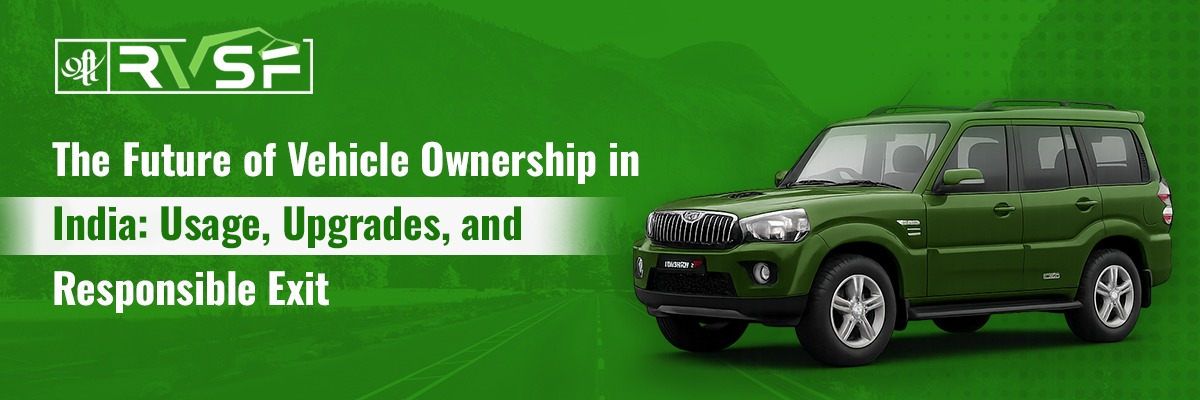


Vehicle ownership in India is undergoing a fundamental shift. What was once viewed as a long-term asset—kept running for decades through repairs and informal maintenance—is now increasingly seen through a lifecycle lens: how a vehicle is used, when it is upgraded, and how it responsibly exits the system.
This shift is not cosmetic. It reflects deeper changes in policy, environmental priorities, consumer economics, and global mobility standards.
From “Own Forever” to Lifecycle Thinking
India is one of the world’s fastest-growing vehicle markets, with ownership expanding rapidly across personal mobility and commercial fleets. However, this growth has also led to an ageing vehicle population—many vehicles remain in use well beyond their optimal operational life.
Globally, mature automotive markets treat vehicle retirement as a planned phase, governed by safety, emissions, and resource recovery norms. In India, until recently, vehicle exit was largely informal, unregulated, and invisible. Owners often depended on local scrap dealers without formal deregistration or environmental safeguards.
That is now changing, as structured systems and authorised vehicle scrapping facility networks bring transparency and compliance into the process.
Why Responsible Exit Is Becoming Essential
Several converging forces are reshaping how vehicle ownership is defined:
Environmental Pressure
Older vehicles contribute disproportionately to air pollution due to inefficient engines and outdated emission standards. As cities struggle with air quality, regulators are increasingly targeting ageing vehicles as part of pollution mitigation strategies. Responsible scrapping ensures proper handling of oils, batteries, plastics, and hazardous components that would otherwise harm the environment.
Regulatory Evolution
Fitness testing, deregistration norms, green taxes, and digitised vehicle databases signal a clear policy direction: vehicles are no longer expected to remain in circulation indefinitely. Lifecycle compliance is becoming a core part of ownership. Formal systems now make it possible to sell scrap car online through authorised channels that provide complete documentation and digital traceability.
Economic Logic
Maintaining older vehicles often costs more over time—through higher fuel consumption, frequent repairs, and compliance penalties—than upgrading or exiting responsibly. For fleet operators, this directly affects productivity and profitability. Choosing an authorised vehicle scrapping facility reduces long-term risks linked to improper deregistration or identity misuse.
A Global Perspective on Ownership
In regions such as the EU, Japan, and parts of North America, vehicle ownership includes a clearly defined exit pathway. These systems ensure:
● Environmentally safe dismantling
● Prevention of illegal reuse of parts or identities
● Recovery of valuable materials
● Digital traceability and accountability
India is gradually aligning with these global practices, integrating sustainability and compliance into the automotive lifecycle. The ability to sell scrap car online through transparent, government-recognised platforms is part of this transformation.
The Consumer Mindset Is Catching Up
Indian consumers are becoming more informed and sustainability-aware. Urban buyers increasingly value emissions performance, while commercial operators analyse total cost of ownership rather than upfront price alone.
However, a gap remains between awareness and action. Many vehicle owners still rely on informal disposal channels due to lack of clarity, accessibility, or trust in formal systems. Expanding access to authorised vehicle scrapping facility services and simplifying the process to sell scrap car online will be critical to making lifecycle ownership the norm.
What Vehicle Ownership Will Look Like by 2026
Looking ahead, vehicle ownership in India is likely to be defined by:
● Strategic planning: Owners factoring exit and upgrade into purchase decisions
● System transparency: Demand for compliant, traceable processes
● Integrated incentives: Financial and regulatory benefits linked to responsible exit
Ownership will increasingly be measured not just by how long a vehicle is used, but by how responsibly it is retired. The decision to sell scrap car online through a certified vehicle scrapping facility will become a standard part of the ownership journey.
How SRI RVSF Fits into the Lifecycle
This is where SRI RVSF, a government-authorised Registered Vehicle Scrapping Facility, plays a meaningful role in the ecosystem.
SRI RVSF supports responsible vehicle exit by:
● Ensuring environmentally compliant dismantling, including safe handling of hazardous materials
● Providing complete regulatory documentation, including deregistration and certificates that support future vehicle purchases
● Offering a structured, transparent process that replaces informal, high-risk disposal practices
● Enabling vehicle owners to sell scrap car online through a secure and compliant system
By formalising the final phase of vehicle ownership, authorised vehicle scrapping facility operators like SRI RVSF help align India’s automotive ecosystem with global standards of safety, sustainability, and accountability.
Conclusion
The future of vehicle ownership in India is no longer just about acquisition and usage. It is about complete lifecycle responsibility—from first drive to final exit.
As policy frameworks mature and consumer awareness grows, responsible exit will become an expected part of ownership, not an afterthought. The ability to sell scrap car online via an authorised vehicle scrapping facility represents a structural shift toward transparency, environmental stewardship, and regulatory compliance.
Organisations that enable this transition will quietly but decisively shape the next phase of India’s mobility evolution.